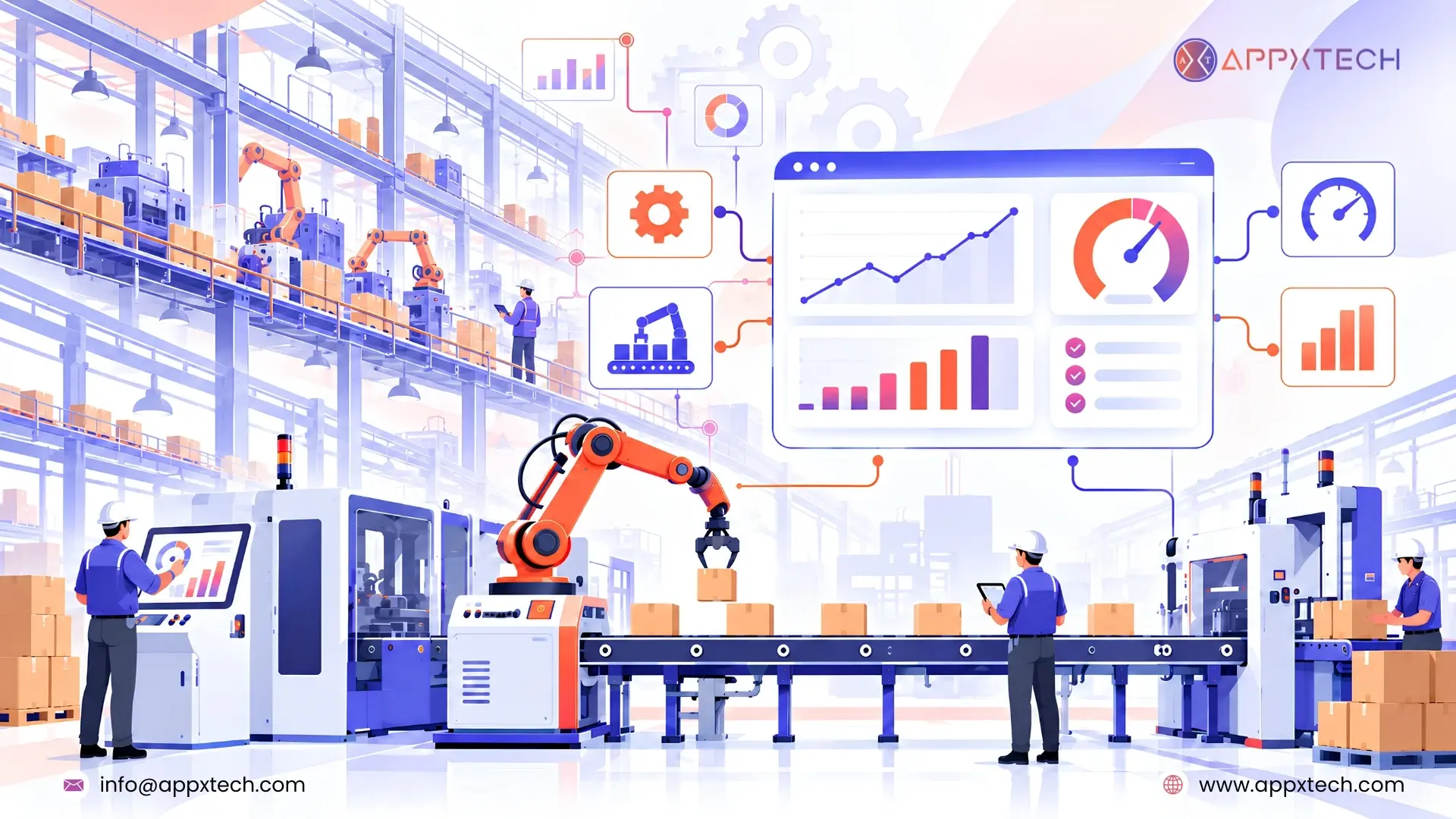
Manufacturing efficiency is no longer just about producing more products in less time. It is about maintaining quality, reducing operational costs, minimizing downtime, and ensuring that every production process runs smoothly. But how can manufacturers identify problems before they affect productivity?
The answer lies in real-time manufacturing KPIs.
These performance indicators help manufacturers understand what is happening on the shop floor, identify inefficiencies, and make informed decisions without waiting for end-of-day reports. With Real-time business intelligence, businesses can turn production data into actionable insights and improve operational performance.
Modern Operational Intelligence Solutions make it easier to monitor equipment, track production activities, and identify performance gaps as they happen.
In this blog, we explore 10 important real-time manufacturing KPIs that can help manufacturers improve production efficiency, reduce waste, and build smarter manufacturing operations.
What Are Real-Time Manufacturing KPIs?
Real-time manufacturing KPIs are measurable indicators that help businesses evaluate production performance as operational data becomes available. They provide visibility into machine performance, production output, product quality, maintenance activities, and resource utilization.
Unlike traditional reporting methods, real-time KPI monitoring allows manufacturers to identify unexpected changes during production. For example, if a machine starts producing fewer units than expected, supervisors can investigate the issue immediately instead of discovering it after the shift ends.
10 Real-Time Manufacturing KPIs to Improve Production Efficiency
1. Overall Equipment Effectiveness (OEE)
Overall Equipment Effectiveness helps manufacturers understand how effectively their equipment performs during production. It considers equipment availability, operating speed, and product quality. Monitoring OEE in real time helps identify hidden production losses, making it easier to improve machine performance and eliminate recurring inefficiencies.
2. Production Throughput
Production throughput measures how many finished products move through a manufacturing process within a specific period. Tracking throughput in real time helps supervisors understand whether production lines are meeting their targets. When output suddenly decreases, teams can investigate machine issues, material shortages, or workflow disruptions before they affect delivery schedules.
3. Cycle Time
Cycle time represents the duration required to complete a manufacturing operation or produce a single unit. Monitoring cycle time helps manufacturers identify slow processes, inconsistent machine performance, and unnecessary delays. When production cycles become longer than expected, teams can investigate the cause and improve workflow consistency.
4. Machine Availability
Machine availability indicates how often equipment is ready to operate during its planned production time. Unexpected failures, lengthy changeovers, and maintenance delays can reduce availability. Real-time monitoring helps manufacturers identify these interruptions quickly, improve equipment reliability, and ensure that production resources remain available when they are needed.
5. First Pass Yield (FPY)
First Pass Yield measures how many products meet quality requirements without requiring rework or additional inspection. A consistently high yield indicates that manufacturing processes are performing effectively. Monitoring this KPI helps quality teams detect recurring defects, identify process variations, and improve product consistency while reducing unnecessary production costs.
6. Scrap Rate
Scrap rate tracks the amount of material or finished products that must be discarded because they fail to meet quality standards. Real-time scrap monitoring helps manufacturers identify waste as it occurs. By examining production conditions, material quality, and machine settings, teams can reduce defects, conserve resources, and improve profitability.
7. Unplanned Downtime
Unplanned downtime occurs when equipment unexpectedly stops working during scheduled production hours. It can result from machine failures, material shortages, or operational issues. Monitoring downtime in real time helps manufacturers identify interruptions quickly, understand their causes, and take corrective action before production delays become more expensive.
8. Mean Time to Repair (MTTR)
Mean Time to Repair measures how quickly maintenance teams restore equipment after a breakdown. A longer repair duration can affect production schedules and increase operational costs. Tracking MTTR helps manufacturers identify maintenance delays, improve troubleshooting procedures, and ensure that technicians have the tools and spare parts needed to resolve equipment issues efficiently.
9. Capacity Utilization
Capacity utilization helps manufacturers understand how effectively their available production capacity is being used. Low utilization may indicate underused equipment, inefficient scheduling, or insufficient demand. Real-time visibility helps production managers balance workloads, identify available resources, and improve output without immediately investing in additional machinery.
10. Energy Consumption per Unit
Energy consumption per unit helps manufacturers understand how much energy is required to produce their products. Unexpected increases may indicate inefficient equipment, excessive idle time, or changing production conditions. Monitoring energy usage in real time helps businesses identify improvement opportunities, reduce utility expenses, and support more sustainable manufacturing practices.
How Many KPIs Should You Track?
Monitoring too many KPIs at once can make it difficult for manufacturing teams to focus on what truly matters. Instead of tracking all 10 metrics from the beginning, manufacturers should start with 3 to 5 KPIs that address their most pressing operational challenges, such as equipment downtime, product defects, or delayed deliveries. Once these areas improve, additional KPIs can be introduced gradually.
However, selecting the right metrics is only the first step. Each KPI should have a clearly assigned owner and a defined review schedule to ensure that performance insights lead to meaningful action. Production and safety metrics may require daily monitoring, while quality and maintenance indicators can be reviewed weekly. Delivery and workforce performance are often assessed monthly to support long-term planning and continuous improvement.
How to Choose the Right KPIs
Understanding which KPIs are available is only the first step. The next is selecting the metrics that best support your manufacturing goals. Whether you want to reduce operating costs, improve product quality, minimize downtime, or use resources more efficiently, each KPI should help you identify opportunities for improvement.
Here are four practical ways to choose the right manufacturing KPIs:
Align KPIs with Business Goals
Identify your main objectives before selecting metrics. Determine whether your priority is increasing production output, controlling costs, improving quality, or meeting delivery deadlines.
Identify Areas That Need Improvement
Examine your production processes to uncover recurring bottlenecks, equipment failures, quality issues, and resource shortages. Focus on KPIs that help address these challenges.
Use Reliable and Accurate Data
Choose metrics supported by consistent, trustworthy data. Accurate information helps teams evaluate performance correctly and make confident operational decisions.
Choose Metrics That Drive Action
Prioritize KPIs that reveal performance gaps and guide corrective action. With real-time business intelligence, manufacturing teams can turn these insights into practical improvements and measurable results.
Also Read:- https://www.appxtech.com/blog/ai-applications-business-process-automation
How Appxtech Operational Intelligence Solutions Enhance Manufacturing KPIs
Tracking manufacturing KPIs is only valuable when businesses can turn performance data into actionable insights. This is where Appxtech's Operational Intelligence Solutions can help manufacturers improve operational visibility, identify production inefficiencies, and make faster, data-driven decisions.
By leveraging real-time business intelligence, manufacturers can gain better insights into equipment performance, production output, product quality, and resource utilization. These insights help teams identify emerging issues, respond to operational challenges, and continuously improve manufacturing efficiency.
Appxtech's Operational Intelligence Solutions can support manufacturing businesses in the following ways:
Real-Time Performance Monitoring: Gain timely visibility into production activities and key performance indicators to identify deviations from operational targets.
Reduced Equipment Downtime: Monitor equipment performance and detect potential issues early, helping maintenance teams respond faster and minimize production interruptions.
Improved Product Quality: Track quality-related KPIs, such as First Pass Yield and scrap rate, to identify recurring defects and opportunities for process improvement.
Data-Driven Decision-Making: Convert operational data into meaningful insights that help managers evaluate performance, prioritize corrective actions, and optimize production processes.
Better Resource Utilization: Monitor labor productivity, capacity utilization, and energy consumption to identify inefficiencies and use manufacturing resources more effectively.
By combining real-time monitoring with operational intelligence, manufacturers can move beyond traditional reporting and develop a more proactive approach to performance management. With the right insights available at the right time, businesses can improve production efficiency, control operational costs, and work toward their manufacturing goals.
Final Thoughts on Improving Manufacturing Efficiency
Manufacturing efficiency depends on how effectively businesses manage equipment, production processes, workforce performance, product quality, and operational resources.
The 10 real-time manufacturing KPIs discussed in this blog provide valuable insights into these critical areas. They help manufacturers identify bottlenecks, reduce downtime, improve quality, and maintain better control over production activities.
By combining real-time monitoring with Real-time business intelligence and modern Operational Intelligence Solutions, manufacturers can make faster decisions, improve operational visibility, and build more efficient production environments.
The future of manufacturing belongs to businesses that do more than collect data. It belongs to those that transform data into meaningful action and continuously improve the way they operate.
Boost manufacturing efficiency with Appxtech
Frequently Asked Questions
What are real-time manufacturing KPIs?
Real-time manufacturing KPIs are measurable indicators that help manufacturers monitor production output, equipment performance, product quality, downtime, and resource utilization to make faster operational decisions.
Which manufacturing KPIs are most important for improving production efficiency?
Key manufacturing KPIs include Overall Equipment Effectiveness (OEE), production throughput, cycle time, machine availability, First Pass Yield (FPY), scrap rate, unplanned downtime, MTTR, capacity utilization, and energy consumption per unit.
How do real-time manufacturing KPIs help reduce production downtime and waste?
Real-time manufacturing KPIs help identify equipment interruptions, production bottlenecks, and quality issues as they occur. Monitoring downtime, MTTR, and scrap rate enables manufacturers to take corrective action, reduce material waste, and improve production efficiency.
How can Operational Intelligence Solutions improve manufacturing KPI monitoring?
Operational Intelligence Solutions help manufacturers analyze operational data, monitor equipment performance, identify production inefficiencies, and gain actionable insights. This enables teams to respond to performance issues faster and make data-driven decisions.
How does real-time business intelligence help manufacturers improve production efficiency?
Real-time business intelligence transforms production data into actionable insights, helping manufacturers track KPIs, identify performance gaps, optimize resource utilization, improve product quality, and make informed decisions to enhance operational efficiency.
